
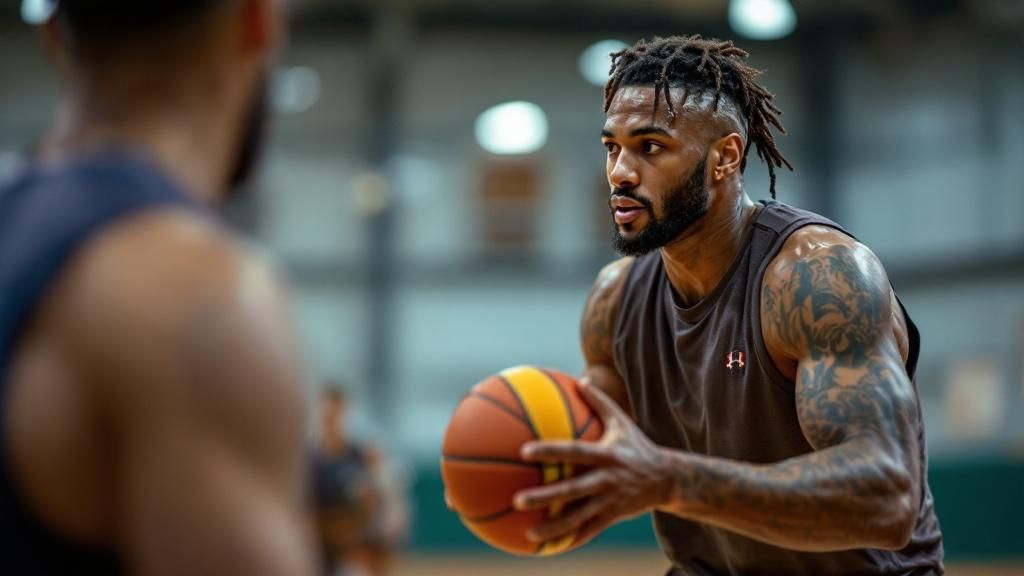
In an groundbreaking cross-continental partnership, elite NBA players are unveiling their most guarded training methodologies to European basketball academies, significantly altering player development internationally. This groundbreaking initiative sees top American basketball talent imparting state-of-the-art training protocols, tactical innovations, and mental preparation strategies with the continent’s most promising young talent. Learn how this international partnership is transforming basketball across Europe, elevating competitive standards, and creating unprecedented opportunities for the next generation of worldwide competitors.
Elite American Training Approaches Reshape Development in Europe
The incorporation of NBA training approaches into European academies marks a significant transformation in basketball training philosophy. American coaches emphasise individualised training programmes customised for each player’s unique strengths and weaknesses, standing apart from traditional European approaches that often emphasise team-oriented systems. This customised approach has proven notably impactful, enabling European athletes to cultivate more comprehensive playing capabilities whilst preserving the defensive structure and strategic understanding European basketball is recognised for.
European basketball officials have recognised the substantial value in adopting these American developments, establishing formal partnerships with NBA teams and their coaching personnel. These collaborations enable consistent information sharing through training clinics, video analysis sessions, and direct mentorship programmes. The outcome is a combined training approach that synthesises American technical excellence with European foundational approaches, creating a complete training setting that prepares young European athletes for competitive play at the top tier.
Strength and Conditioning Innovations
NBA strength training programmes employ sophisticated biomechanical assessment and data-driven methodologies that have reshaped how European academies approach player development. American coaches implement structured periodisation approaches, combining sport-focused conditioning with injury mitigation strategies that substantially decrease athlete absence. European facilities are increasingly investing in cutting-edge equipment and technology, including force measurement systems and kinematic monitoring systems, enabling coaches to optimise training loads and track player development with exceptional detail.
The focus on dynamic strength building and movement flexibility has notably caught the attention of European coaching personnel, as these factors directly enhance on-court performance during intense competitive play. NBA performance coaches advocate for ongoing strength and conditioning rather than time-limited programmes, ensuring players preserve elite conditioning throughout extended competitive calendars. European training centres have adopted this approach, implementing continuous monitoring systems and personalised recovery protocols that reflect elite-level practices, significantly enhancing athlete durability and extended playing careers.
Professional Ability Building Techniques
American coaches emphasise match-authentic skill training, highlighting pressure-based decision-making and reading the game combined with technical ability. NBA training sessions incorporate fast-paced drills that simulate actual match conditions, calling for players to deliver complicated techniques whilst fatigued and defended. European academies have adopted these intensive methodologies, departing from standard drill-focused training in favour of dynamic game-tempo situations that more adequately equip athletes for the demands of professional sport and intensity of competition.
The American approach to three-point shooting development has significantly transformed European basketball, with academies adopting focused initiatives emphasising range, consistency, and shot selection. NBA coaches emphasise shooting mechanics refinement through film review and biomechanical feedback, allowing players to develop reliable long-range capabilities. Additionally, American mentors advocate scoring flexibility and dribbling proficiency for all positions, fundamentally reshaping positional definitions in European basketball and developing highly versatile, multifaceted players capable of thriving in modern professional environments.
Cultural Exchange and International Collaboration
The partnership between NBA professionals and European academies constitutes far more than a simple knowledge transfer; it demonstrates a authentic mutual dialogue that benefits both parties involved. American coaches and players introduce unique approaches rooted in the NBA’s winning culture, whilst European institutions champion established practices stressing foundational skills and tactical sophistication. This mutual connection cultivates shared appreciation and insight, allowing athletes from varying regions to recognise diverse methods to basketball excellence. The integrated approach creates a truly global perspective on player development.
International partnership has driven unprecedented connection-building prospects within European basketball circles. Young athletes gain invaluable exposure to elite coaching standards, whilst simultaneously forging relationships with elite coaching figures and scouts. These relationships often go beyond the training pitch, covering coaching programmes and regular expert advice. Furthermore, European academies now attract increased investment and sponsorship, bolstering their resources considerably. This collaborative framework demonstrates how multicultural alliances can elevate entire sporting ecosystems, positioning European basketball as a credible contender on the global stage.
Future Prospects for Basketball in Europe Excellence
The collaboration between NBA stars and European academies has established a robust foundation for sustained excellence in continental basketball. Young European players now benefit from premier coaching methodologies once accessible only to leading American programmes. This exchange of expertise promises to enhance player development substantially, possibly producing European athletes capable of competing at the elite global levels. The partnerships create enduring connections between institutions, ensuring continued mentorship and resource sharing for the long term.
Looking ahead, European basketball academies are positioned to become globally competitive talent incubators. The infusion of NBA training secrets has enhanced coaching standards and player expectations throughout the continent. Within the next decade, we anticipate increased European representation in professional leagues worldwide, improved performance at international competitions, and a reinforced basketball culture across Europe. This exchange initiative ultimately serves the sport globally, fostering greater competitiveness and mutual respect amongst basketball communities.
