
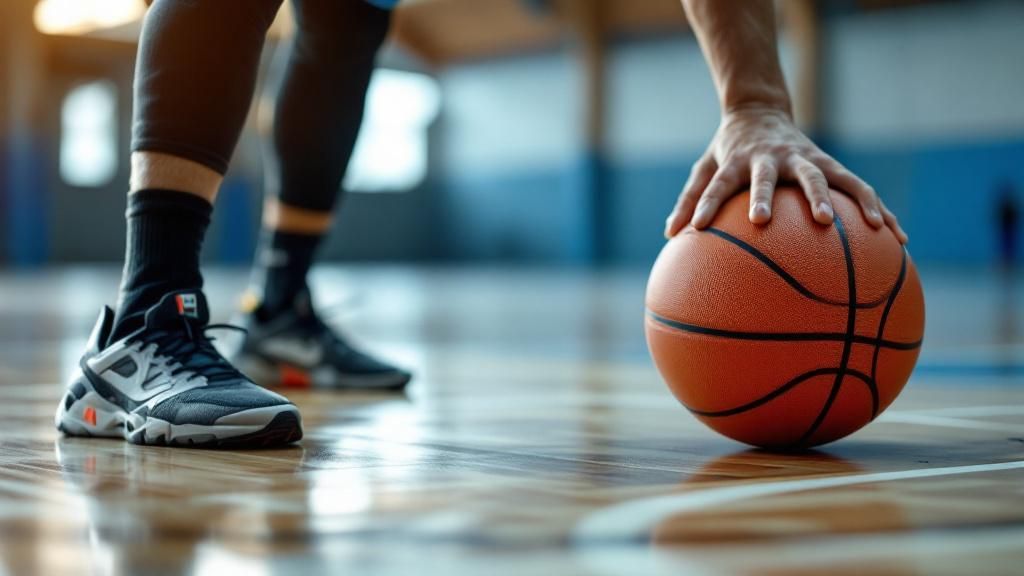
Basketball players deal with unrelenting physical pressures that jeopardise their careers earlier than expected. However, introducing evidence-based injury mitigation approaches can markedly increase an athlete’s career span on the court. This article examines the best-performing techniques—from focused conditioning work and mobility training to correct restoration methods and biomechanical analysis—that help players protect themselves from frequent damage. Discover how experienced and developing athletes alike are utilising these established techniques to prolong their time on court and sustain optimal fitness throughout their careers.
Critical Role of Preventing Injuries in The Sport of Basketball
Basketball stands as one of sport’s most physically demanding disciplines, necessitating explosive movements, rapid directional changes, and sustained cardiovascular effort. The ongoing pattern of training and match play places significant stress on athletes’ skeletal and muscular structures. Without appropriate injury management protocols, athletes may sustain immediate trauma or persistent disorders that can end early successful careers. Adopting preventative approaches allows players to preserve their bodily condition whilst continuing to perform at the highest standards throughout their time as professional athletes.
The monetary consequences of basketball injuries reach past individual athletes to include entire franchises and organisations. Teams forfeit key resources when key players sustain career-threatening damage, impacting performance, revenue, and future business strategy. Medical expenses, physiotherapy charges, and diminished performance represent considerable outlays that clubs must absorb. By emphasising preventative injury strategies, organisations express dedication to athlete welfare whilst protecting their competitive interests and fiscal health. This combined advantage makes prevention strategies financially sound for all stakeholders involved.
Career longevity directly relates to an athlete’s ability to avoid serious injuries that compromise physical abilities. Players who sustain peak conditioning, flexibility, and biomechanical efficiency benefit from longer careers and increased financial rewards. Prevention-focused approaches empower athletes to direct their physical wellbeing rather than treating injury as a necessary outcome of participation. This forward-thinking approach fundamentally transforms how today’s basketball professionals manage their professional development and career planning approaches.
Essential Conditioning and Strength Training Approaches
Proper conditioning establishes the foundation of injury prevention in basketball. Players must develop well-rounded strength training programmes that focus on stabilizing muscle groups around at-risk joints, notably the ankles, knees, and shoulders. Including eccentric exercises—where muscles lengthen under tension—proves especially beneficial for preventing ligament injuries. Incremental resistance work, paired with plyometric work, improves strength endurance and proprioception. Coaches should establish periodised training cycles that combine intensity with proper recovery, confirming athletes create strength without overtraining. This organised strategy significantly reduces injury risk whilst preserving performance standards.
Sport-specific training exercises must replicate the rapid motions basketball requires. Lateral agility work, dynamic plyometric work, and omnidirectional sprint work condition the body for game scenarios. Core strengthening warrants special attention, as a robust core boosts balance, decreases compensatory movements, and protects against lower back injuries. Functional training that mimics game scenarios—such as rapid deceleration and directional shift exercises—strengthens neuromuscular coordination. Integrating these methods into standard training plans allows athletes to establish physical resilience progressively, enabling longer, healthier careers whilst preserving the explosive athleticism crucial to basketball excellence.
Recovery Methods and Recommended Practices
Optimal recovery is fundamental to injury prevention and career longevity in basketball. Professional athletes understand that the time spent on recovery is equally important as training itself. Implementing organised recovery strategies—including proper sleep, dietary assistance, and deliberate rest periods—allows the body to restore tissue integrity and strengthen tissues. Players who focus on recovery experience better performance outcomes, lower injury incidence, and improved psychological strength. By treating recovery as a vital aspect of their training regimen rather than a passive activity, basketball players can maintain their competitive edge whilst reducing injury potential throughout their careers.
- Ice baths reduce inflammation and accelerate muscle recovery efficiently.
- Foam rolling enhances range of motion and relieves muscular tension on a regular basis.
- Adequate sleep promotes tissue healing and brain function.
- Massage therapy improves blood flow and decreases muscle pain.
- Balanced nutrition refills energy reserves and supports healing.
Integrating these recuperation techniques into a broad-based injury prevention strategy requires dedication and discipline from athletes and coaching staff alike. Modern basketball programmes increasingly engage sports scientists and physiotherapists who develop personalised recuperation programmes suited to each player’s particular requirements and prior injuries. By assessing recovery markers such as pulse variation and sleep metrics, teams can enhance training loads and reduce overuse injuries. This data-driven approach to recovery demonstrates that extending playing careers depends not solely on preventing injuries, but on optimising the body’s capacity to heal and adapt.
